2.4 GHz vs 5 GHz vs 6 GHz: Choosing the Right WiFi Band
Understanding the differences between wireless bands is key to optimizing your home network performance.
Understanding Frequency Bands
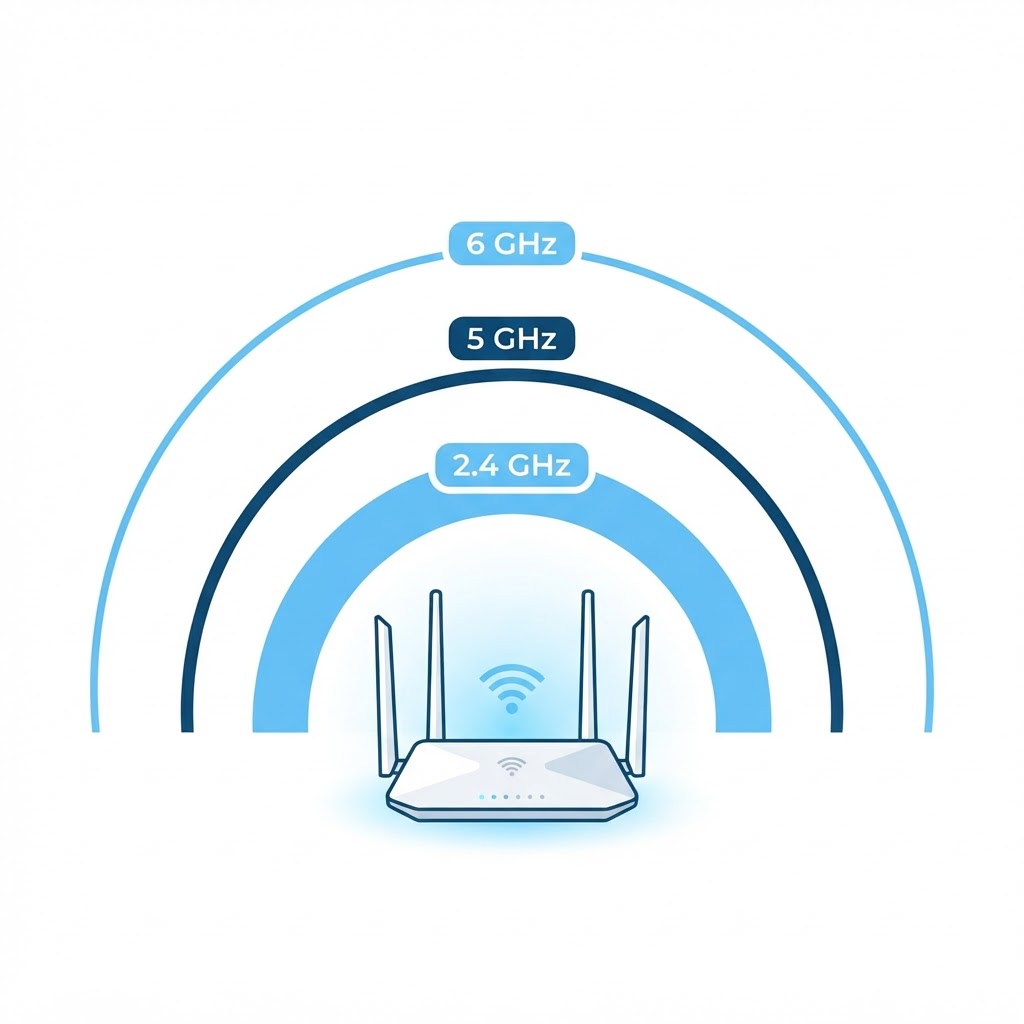
Think of WiFi bands like lanes on a highway. The 2.4 GHz band is the wide, slow lane. It travels long distances and penetrates walls easily, making it great for smart bulbs and basic devices, but it is prone to interference. The 5 GHz band is the fast, middle lane. It provides higher speeds for streaming and gaming but has a shorter range.
Enter the 6 GHz Band
The 6 GHz band is the new express lane, available only on WiFi 6E and WiFi 7 devices. It offers massive bandwidth and almost zero interference because it is a wide-open spectrum. While it covers the least distance, it provides the fastest possible connection for your primary devices like laptops and modern smart TVs. For the best experience, place your router in a central location to balance these three bands effectively.
Need Immediate Remote Tech Support?
A certified US technician connects to your computer remotely, often within 2 hours. Pick a flat-rate service and check out in under a minute.